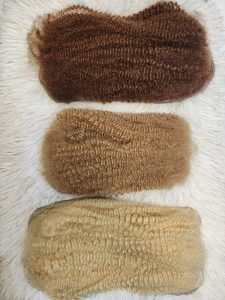
 Sometimes, the texture of the hair is not what changes the look of a braid the most. The color does.
Take the same Afro Kinky 4C human hair and change the shade from Color 30 to Color 27 or Color 613, and the finished hairstyle can take on a completely different personality.
That is why choosing colored Afro Kinky hair is not simply a matter of asking, “Which color is available?”
The better question is:
“What do I want my braids to look like when they are finished?”
The image above shows three shades 30, 27, and 613 each offering a different direction for the final style.
Color 30: A Warmer, More Understated Look
Color 30 sits in the warmer brown family and gives Afro Kinky braids a rich change in tone without going extremely light.
This can be a good choice when you want color to be noticeable but still want the hairstyle to maintain a warm, grounded appearance.
Against darker natural hair, Color 30 can create a soft contrast. Instead of the color immediately becoming the main focus, it becomes part of the overall hairstyle.
For someone trying colored extensions for the first time, this type of shade can provide a more gradual transition into color.
Color 27: When You Want the Color to Speak More
Move from Color 30 to Color 27, and the difference becomes more visible.
Color 27 has a lighter, warmer appearance, giving the braids more brightness and making the extension color a stronger part of the finished look.
This shade can be especially interesting when the goal is to make the braids themselves more noticeable.
Rather than simply adding warmth, Color 27 can help create a hairstyle where the color contributes significantly to the overall appearance.
Color 613: The Bold Blonde Choice
Then there is Color 613.
This is where the color becomes much more prominent.
The light blonde shade creates a stronger visual contrast and immediately changes the character of the Afro Kinky texture.
If Color 30 is about warmth and Color 27 brings more brightness, Color 613 takes the look considerably further into blonde.
It is a choice for someone who wants the color to be part of the statement.
The Interesting Part: The Texture Does Not Change
Although the colors look very different, they are all presented in the Afro Kinky 4C texture.
That distinction matters.
Changing the color does not mean you are changing the character of the texture. The textured appearance of Afro Kinky hair remains an important part of the finished braid.
So you can think about your decision in two separate ways:
Texture: Afro Kinky 4C
Color: 30, 27 or 613
That gives you more control over the final appearance.
Imagine the Same Braided Style in All Three Colors
This is one of the easiest ways to understand the difference.
Imagine the same braid design, the same length and the same installation technique.
Now change only the extension color.
With Color 30, the hairstyle takes on a warmer brown appearance.
With Color 27, the same style becomes lighter and more golden.
With Color 613, the hairstyle becomes a much brighter blonde statement.
The braid itself has not changed.
The color has changed how you see it.
You Can Also Think About Color in Terms of Contrast
Another way to choose your shade is to consider how much contrast you want between the extensions and your natural hair.
A darker natural base paired with Color 30 can create a relatively warm transition.
Color 27 creates more visible contrast.
Color 613 creates a much stronger contrast, particularly when incorporated extensively throughout the hairstyle.
This is why the same color can look completely different depending on how much of it is used and how it is incorporated by the braider.
One Color Does Not Have to Tell the Whole Story
Colored extensions can also be incorporated strategically rather than making the entire hairstyle one solid shade.
A professional braider can determine how to distribute different shades depending on the desired design.
For example, a client may want a dominant shade with another color incorporated as an accent.
The possibilities depend on the braid design, the amount of hair being used, and the look the client wants to achieve.
This is where colored Afro Kinky extensions become more than simply “braiding hair.”
They become part of the design process.
Think About the Occasion Too
Your color choice can also depend on where and how you intend to wear the hairstyle.
Some clients prefer a color that blends more naturally into their everyday appearance.
Others want their braids to be one of the first things people notice.
There is no need to choose a lighter shade simply because it is more noticeable. The best color for a particular installation is the one that fits the look you actually want.
What About Length?
Once you have decided on the color, the next consideration is length.
The color and length work together.
A long Color 613 installation, for example, will create a very different visual impact from a shorter Color 613 style.
Likewise, Color 30 can appear more subtle in one installation and much more noticeable in another depending on the amount of hair used and the finished length.
So do not choose color separately from the hairstyle.
Think about color + length + braid design as one complete look.
And Then There Is the Installation
The way Afro Kinky human hair is incorporated into the braid also influences the finished appearance.
Professional installation helps control the amount of extension hair being added and how consistently the hair is distributed throughout the style.
This becomes particularly important with colored extensions.
A color that looks balanced in the bundle may produce a very different result when used across dozens of individual braids.
Good installation is therefore part of achieving the intended final look.
Caring for Colored Afro Kinky Human Hair
Once installed, colored human hair should be treated with care.
Avoid unnecessary pulling and excessive manipulation. Keep the extensions clean and manageable, and use appropriate conditioning when needed.
Heat should also be used carefully, particularly if maintaining the original texture is important to you.
The goal is not simply to keep the color looking good. You also want to preserve the condition and texture of the human hair.
Which One Is Right for You?
Rather than asking which of these three colors is “better,” consider what you want your hairstyle to communicate.
Color 30 warm, rich and more understated.
Color 27 brighter, warmer and more noticeable.
Color 613 light, blonde and bold.
Your choice can be based on your natural hair color, the braid design, the amount of contrast you want and how prominent you want the extension color to be.
Afro Kinky 4C Human Hair at MICOHYPE BEAUTY HAIR
At MICOHYPE BEAUTY HAIR, we understand that choosing human hair for braiding is not only about the texture.
It is also about how the finished hairstyle is supposed to look.
Our Afro Kinky 4C human hair braiding extensions give clients the opportunity to explore different lengths and shades while maintaining the textured character of Afro Kinky hair.
Whether your preference is the warmth of Color 30, the brightness of Color 27, or the bold blonde appearance of Color 613, the right shade can completely change the finished braid.
The Final Choice
There is no need to look at Color 30, 27 and 613 as simply three numbers.
Think of them as three different directions for your hairstyle.
30 gives you warmth.
27 gives you brightness.
613 gives you bold blonde contrast.
And when those colors are combined with Afro Kinky 4C human hair, you have more than one way to create a braided style that reflects the look you want.
 Chat with us